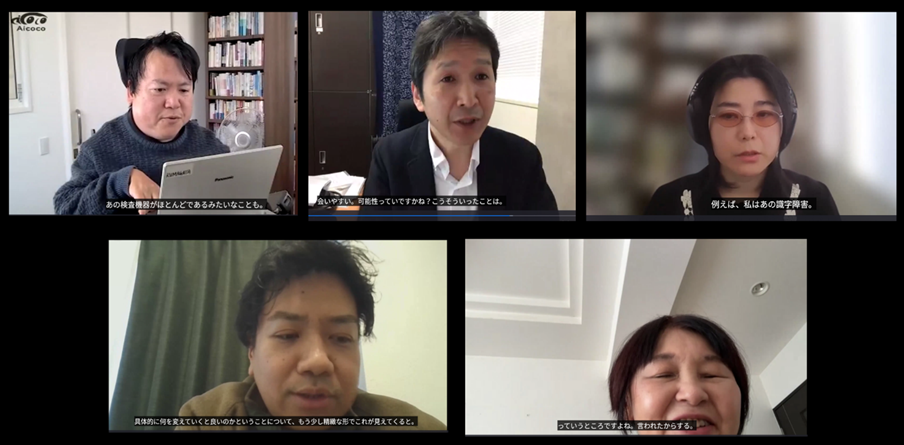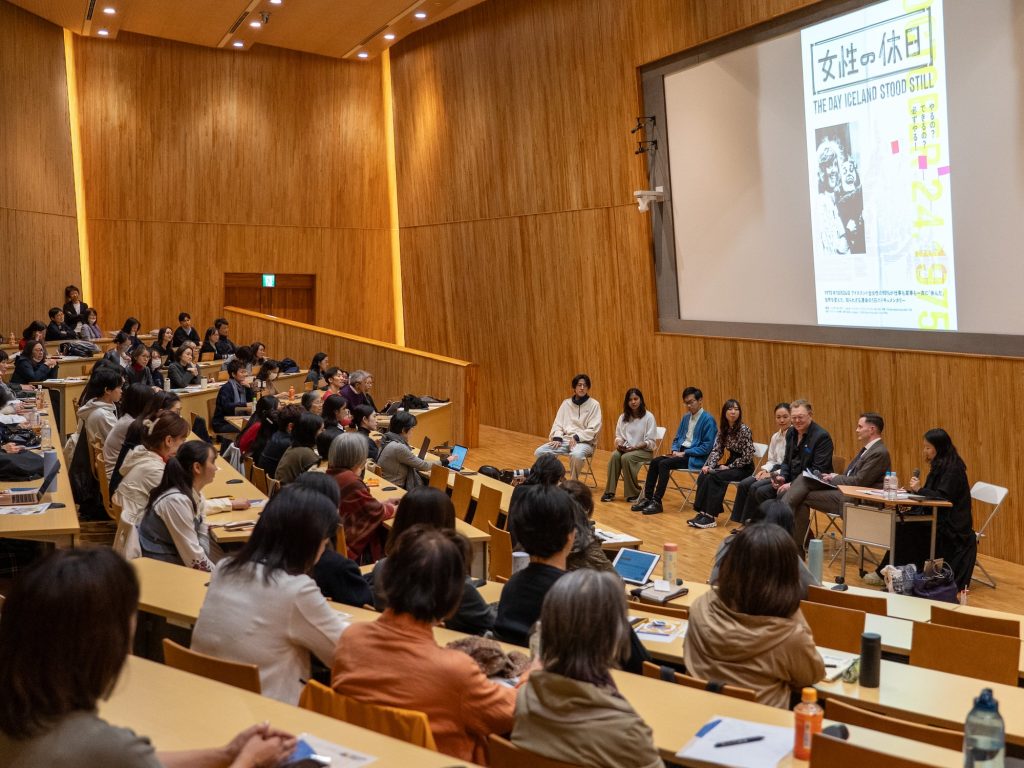



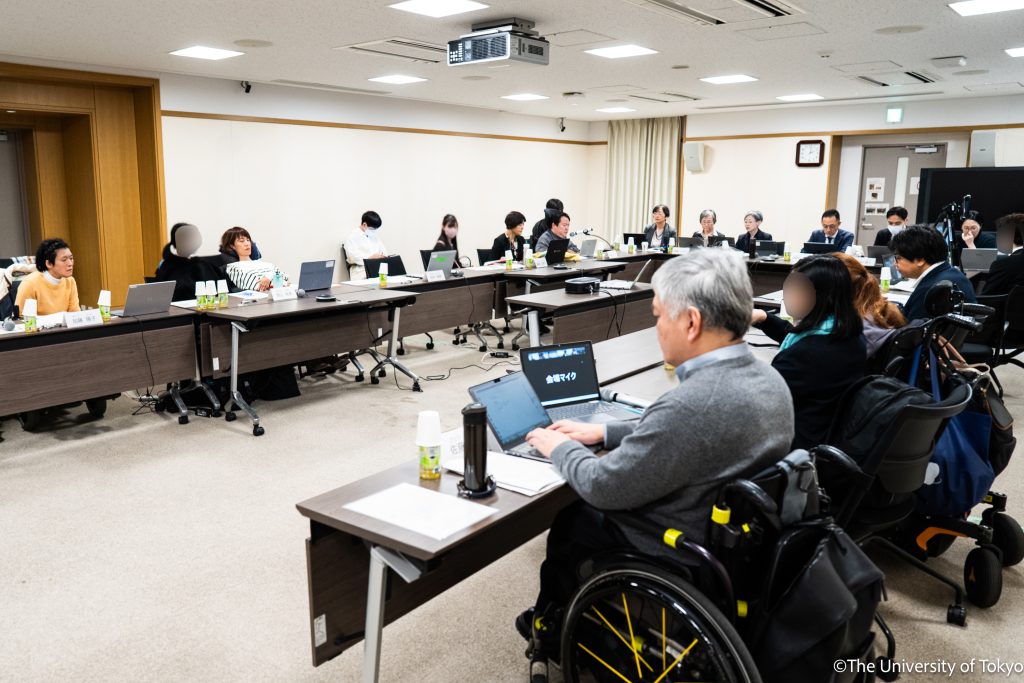
To ensure that the activities of the Center for Coproduction of Inclusion, Diversity and Equity (IncluDE) are based on the principle of “Nothing about us, without us!,” the first IncluDE Advisory Board of Minoritized Groups Meeting was held on December 1, 2025, in the main conference room within the Yasuda Auditorium at the University of Tokyo.
To support the meeting, necessary information accessibility measures were implemented, including: sign language interpreting, real-time captioning, preparation of materials and presentations in Easy-to-Understand Japanese, and the arrangement of personal assistants.
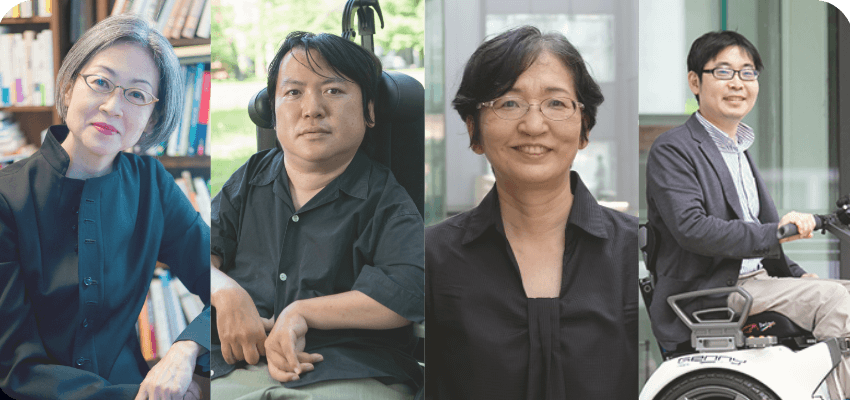
The Advisory Board consists of leaders from groups of disabled people active on the international stage. Participants included executive members of the university, researchers, and practitioners, who engaged in discussions on whether the Center’s activities are truly grounded in the challenges and needs of these groups.
In the first half, the Office for Gender Equity, the Office for Disability Equity, the DEI Research Division, and the Office for DEI Coproduction Strategies presented their current activities and challenges. Following this, the latter half featured comments from the Advisory Board members. The comments were diverse and included points such as: reviewing the modality of support, developing metrics to measure progress toward achieving IncluDE’s mission, considering intersectionality, and visualizing good practices. A frank and constructive dialogue was held throughout.
Furthermore, a key direction for future work was confirmed: connecting proposals from minoritized groups to researchers, thus creating a virtuous cycle of research and practice that can be disseminated both within and outside the university.Stakeholder engagement is accelerating internationally. For example, the UK’s National Institute for Health and Care Research published guidance to support co-production in 2024, and the Canadian Institutes of Health Research positions patients and the public as “partners in research” through its “Strategy for Patient-Oriented Research (SPOR).” Our Advisory Board is an advanced model in Japan, incorporating this trend into the university’s reform decisions and ensuring continuous discussion.