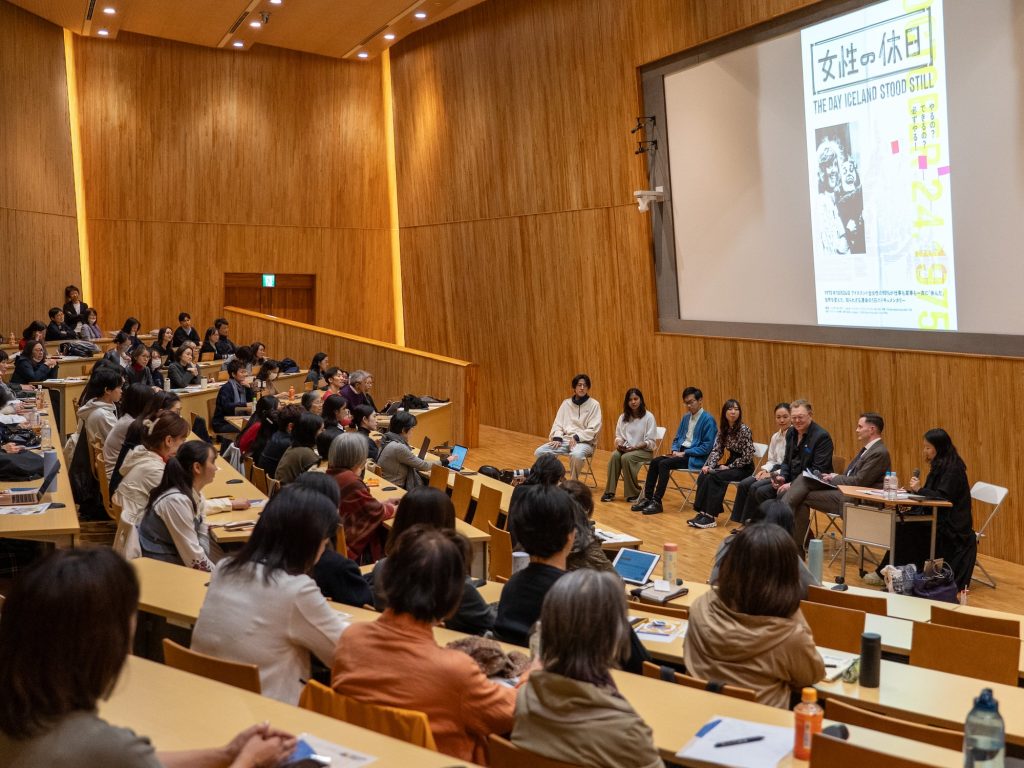




The Center for Coproduction of Inclusion, Diversity and Equity (IncluDE) Kick-off Symposium, “Creating DEI Together,” was held on Monday, September 22, 2025. Approximately 250 people attended the event at The University of Tokyo, Yasuda Auditorium, Main Hall.
The symposium commemorated the launch of IncluDE, established on April 1, 2024. It served as an opportunity to review the center’s activities during its first year and a half, and to reconfirm the importance of IncluDE’s principles of coproduction, diversity, equity, and inclusion—especially at a time when DEI is under pressure in some parts of the world. The event also featured discussions, performances, and exhibitions aimed at further development.

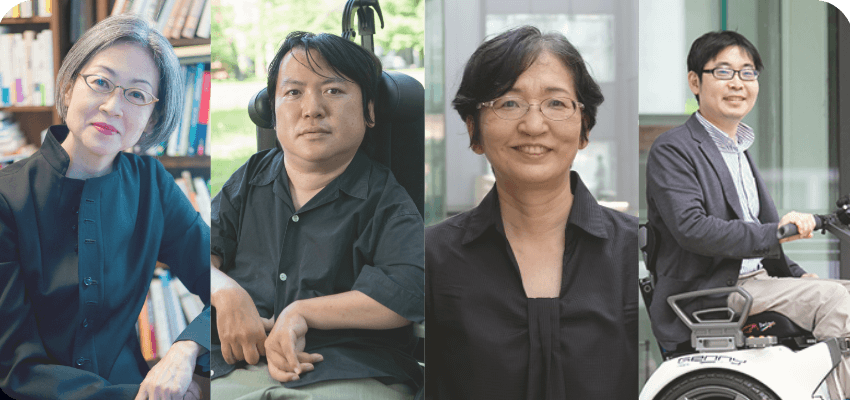
Following the opening address by ITO Takane, Director of IncluDE, greetings and messages of support were offered by distinguished guests: SHIOMI Mizue, Director-General of the Education Policy Bureau, Ministry of Education, Culture, Sports, Science and Technology (MEXT); OKADA Keiko, Director-General of the Gender Equality Bureau, Cabinet Office; and NOMURA Satoshi, Director-General of the Department of Health and Welfare for Persons with Disabilities, Ministry of Health, Labour and Welfare.
After the IncluDE Activity Report and introductions to the activities of the DEI Implementation Division and the DEI Research Division, a panel discussion titled “DEI at UTokyo: Now More than Ever” took place.
The panel featured FUJII Teruo, President of the University of Tokyo; SUGATA Rika, pianist and recipient of the University of Tokyo President’s Grand Prize in AY2022; and OI Mariko, BBC broadcaster (joining from the BBC studio in Singapore). The discussion was actively moderated by MATSUNAKA Gon, Advisor to the Office of the President at the University of Tokyo and an LGBTQ+ activist.
During the panel discussion, each participant wrote and displayed what “DEI means to me” on a board. President FUJII Teruo commented, “I hope that DEI will become like air—indispensable and simply a matter of course.”

When SUGATA Rika shared, “I tend to get attention for categories like being a woman, being from a regional area, or having a visual impairment, but I also have various forms of diversity within me, such as loving music or loving cats,” many panelists and audience members nodded in agreement. OI Mariko referred to the BBC’s efforts to achieve a 50:50 gender balance among its on-screen talent. When asked by MATSUNAKA Gon about the global anti-DEI trend, she remarked that the general atmosphere suggests there is no option to revert back now.


Part I of the symposium featured Japanese Sign Language interpretation projected on the main screen, real-time text transcription displayed on stage, and English interpretation (receivers available at reception). Waving hands was also introduced as an alternative form of applause. The discussion was filled with smiles and a friendly atmosphere, yet it conveyed the University of Tokyo’s firm resolve to continue promoting DEI by involving diverse individuals both within and outside the institution.